
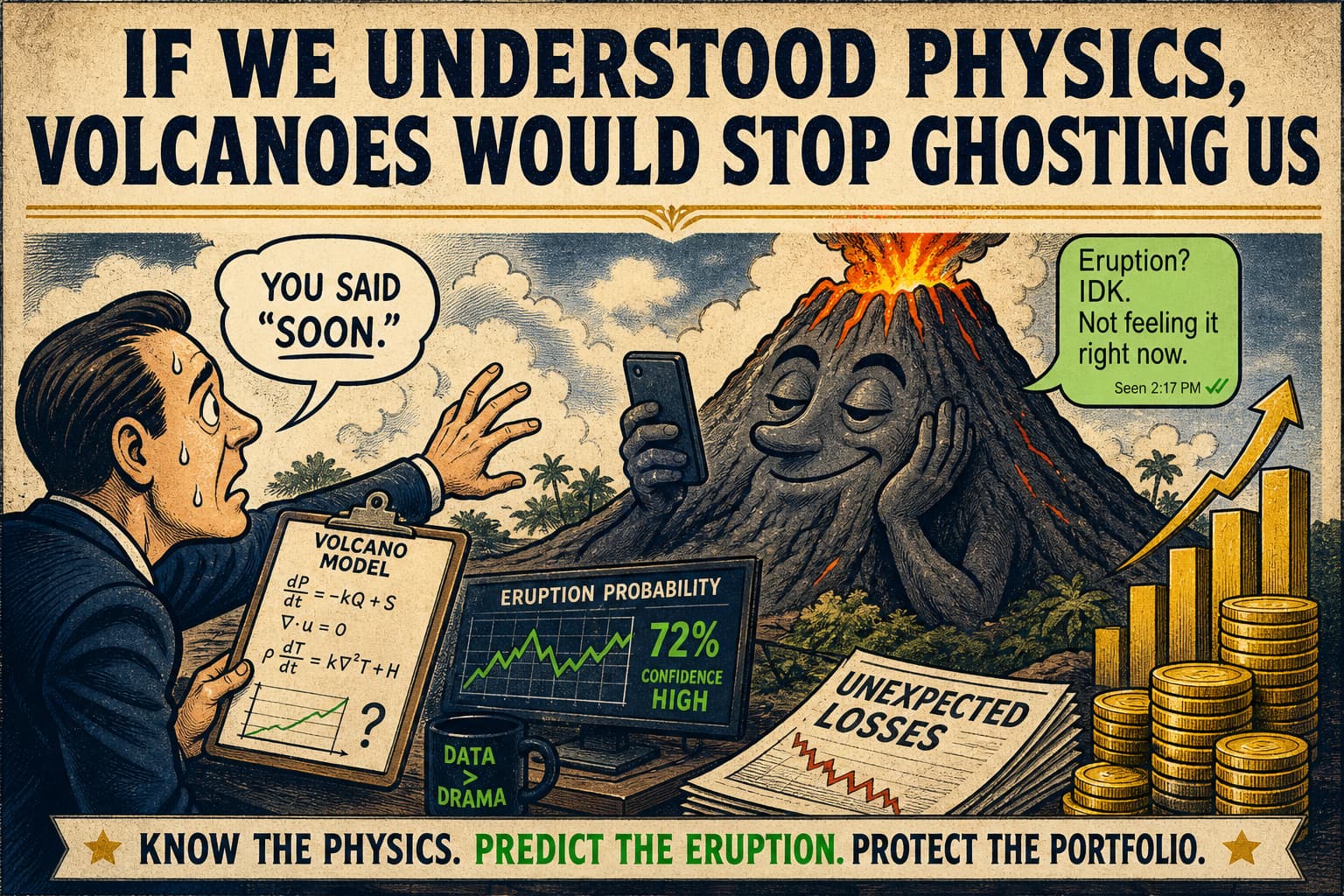
With all due respect to volcanoes, let’s admit one thing: they are basically the universe’s way of reminding us that, no matter how many physics classes you pass or geology documentaries you snooze through, the Earth is still holding a couple of spicy secrets up its molten sleeves.
Take Mount Pinatubo, fiery diva of the Philippines. One fine summer in 1991, Mount Pinatubo decided to reinvent itself in the style of a pop star experiencing a very public meltdown, but with more magma and fewer choreographed dance routines. The only warning it gave? Some excessive burping and a lot of smoke signals, like an angry teapot that’s realized it will never become a coffee machine.
But the real action heroes here aren’t the volcanoes (though, let’s face it, they’ve got a flair for drama). No, the heroes wore science badges and safety goggles, armed with an arsenal of devices that sound suspiciously like gadgets from a second-rate Bond film: seismometers, gas sniffers, rock whisperers, and what I can only imagine are highly trained, magma-resistant squirrels. Their mission was to stick enough sensors on and around the volcano to make it look like it had a WiFi addiction.
The brainstorming sessions were legendary. Top scientists from the US, the Philippines, and probably a few bored birds—all gathered to discuss such things as the probability of Pinatubo going full Hulk mode. Their conclusion? "Whoa, this bad boy doesn't do mild!" Direct quote. Probably.
Still, predicting a volcano’s behavior is less weather forecast and more interpretative dance performance. It’s not, “bring an umbrella, folks!” More like, “You might want to consider an umbrella that doubles as a bunker, or just…move, like, to another continent.”
The real challenge? Volcanoes don’t tweet. They don’t slide into your DMs a week before they blow up to warn you in advance. Instead, their communication style is ‘cryptic ancient god with a hangover.’ Sometimes it’s earthquakes, sometimes gas clouds, sometimes just a weird rumble that could be the volcano...or your uncle’s stomach after taco night.
Since Pinatubo’s explosive debut, humans got fancier tools, like computers that can out-analyze any AP Calculus student and graphics so sleek even the lava is jealous. Machine learning now helps scientists interpret a volcano's vibe like some sort of highly-educated fortune teller, sifting through earth-tweets for signs of imminent doom.
But even with volcano mood rings now part of the science arsenal, asking a volcanologist for precise predictions remains like demanding a karaoke song from someone at a silent meditation retreat. According to some optimistic types in the field, though, there’s a non-zero chance that one day, we’ll be able to set our smartphones to “eruption notifications.” (“Pinatubo is feeling explosive today! Here’s a GIF of magma.”)
The dream is to predict the next lava extravaganza with the same confidence we have about tomorrow’s thunderstorm. But for now, the closest you’ll get to a forecast is, “It’s either a regular Tuesday or the mountain’s about to punt flaming rocks through your mailbox.”
Still, chasing this goal keeps volcanologists up at night, fiddling with their world-saving gadgets, forever asking: will physics finally teach us how to decode a volcano’s secret language? Or will the Earth just keep trolling us with the world’s hottest surprise parties? Stay tuned, and maybe invest in a really, really sturdy umbrella.